TL;DR: Exxaro’s R3.3 billion Belfast coal mine was South Africa’s first greenfields digital mine, targeting 20% production improvement through digitalisation. NxGN designed and built the digital mine operations management system at its heart. We started from management workshops, working backwards from what leaders needed to see to the data and integrations required. Over 17 project phases spanning six years, the platform grew to cover the full value chain from mine plan to port. Belfast produced its first coal six months ahead of schedule, with its digital control room operational from day one.
Fast Facts
| Client | Exxaro Resources; Belfast Coal Mine |
| Industry | Mining; Coal (A-grade export thermal, 6000 kcal/kg) |
| Region | Mpumalanga, South Africa |
| Company size | R3.3 billion greenfields investment; 2.2 MTPA export capacity |
| NxGN service | NxGN MOMS; Mine Operations Management System design, build, and integration |
| Deployment timeline | 17 project phases over 6 years (2018–2023) |
| Key result #1 | First coal produced 6 months ahead of schedule (September 2019) |
| Key result #2 | 30+ real-time videowall displays covering the full value chain |
| Key result #3 | Every operational data source on site integrated into a single data model |
What Problem Was Exxaro Trying to Solve?
Indeed, Exxaro designated Belfast as its flagship digital mine. This R3.3 billion greenfields coal mine is located in Mpumalanga, on the last A-grade, high-yield coal deposit in the province. Unlike brownfield mines, where digitalisation means retrofitting technology, Belfast would be built digitally from the ground up. Importantly, a digital twin existed from inception.
The target was ambitious: a 20% improvement in production through digitalisation over five years. This translates to more than R1 billion of additional revenue.
The Vision
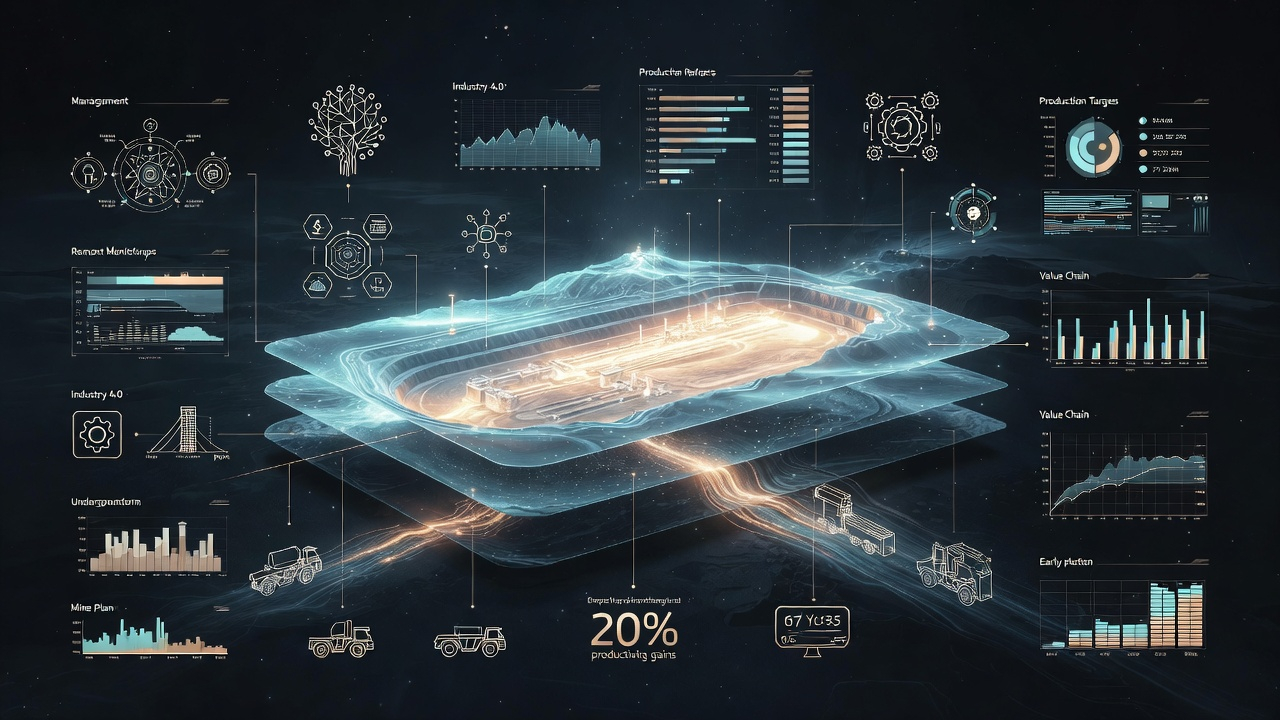
The vision is centred on a digital control room providing real-time visibility across the entire value chain, from mine planning through drilling and blasting, load and haul, plant beneficiation, quality, and logistics to the port. Each department head would have the data needed to manage their part of the chain. However, the mine’s technology landscape included multiple disconnected systems, none of which were connected into a coherent whole.
Why This Was Hard to Solve
Building a digital mine from scratch meant designing the information architecture before the mine was operational. Furthermore, defining what every manager needed to see required tracing those requirements back to source systems that were still being commissioned. The data model had to be designed top-down from management needs rather than bottom-up from available data. Additionally, as the mine progressed from early ROM to full production, the digital platform had to grow alongside it.
What Did NxGN Build?
Starting From the Control Room, Working Backwards
NxGN began with management workshops. We sat with every department head and asked the same question: What graphs, widgets, and KPIs do you need to manage your part of the operation?
From those outputs, we worked backwards. The widgets defined the data needed. The data defined the source systems. The source systems defined the integrations. Consequently, the integrations defined the single data model underneath the control room. This top-down approach produced the architectural blueprint for everything that followed.
The MOMS Platform
Subsequently, NxGN deployed its Mine Operations Management System in phases aligned with Belfast’s operational growth. Every discipline moved to electronic data capture with a capture-review-approve-lock workflow from day one of production. As Belfast scaled, we integrated all on-site source systems into the unified data model.
A dedicated Integration Manager role, maintained across three years, kept the data flows operating as the mine’s digital ecosystem grew more complex.
Predictive Yield Optimisation
One of the most valuable elements was a yield optimisation model. This model tracked material from the geological block model through mining, stockpiling, and crushing into the plant. Importantly, it maintained lot-based tracking of tonnage and quality through each stage. As a result, it could recommend optimal plant settings for each batch entering the beneficiation process. The goal was to maximise export yield while minimising variation in product quality, creating a direct link between operational technology and commercial performance.
The Control Room
The control room videowall became the centrepiece of Belfast’s digital mine. It grew to over 30 real-time displays covering monthly production, stripping ratios, mining operations, plant performance, quality metrics, logistics, weather, and safety. Every display traces back to a management need identified in those initial workshops.
Technical detail: Integration architecture
The MOMS platform integrates with AVEVA AMPLA (production management), AVEVA System Platform and OMI (visualisation), Plant Historian (process data), LIMS (laboratory quality), fleet management systems, ThingWorx SIC (six automated material movement endpoints), Spiral (yield optimisation model), RPM Global (mine planning), and weighbridge infrastructure. All data flows into a unified data warehouse designed top-down from control room requirements. The Spiral model uses washability curves and FIFO silo content modelling to predict optimal Relative Density settings. Laboratory results continuously calibrate predictions.
What Were the Results?
| Metric | Result |
|---|---|
| First coal | Produced 6 months ahead of schedule (September 2019); digital infrastructure operational from day one |
| Value chain coverage | Full integration from mine plan to port across every operational discipline |
| Control room | 30+ real-time videowall displays designed from management workshop requirements |
| Data integration | Every operational source system on site connected into a single data model |
| Yield optimisation | Predictive model recommending optimal plant settings based on lot-tracked material quality |
| Engagement depth | 17 project phases over 6 years; the platform grew as the mine grew |
Why First Coal Ahead of Schedule Matters
Belfast produced first coal six months ahead of schedule in September 2019. Importantly, the digitally connected mine infrastructure directly supported this milestone. The control room was operational from the start of production, giving management the real-time visibility Exxaro’s digital mine vision demanded.
Why Top-Down Design Made the Difference
Most digital mine programmes start with the technology and work forward. However, Belfast started from the other end. Specifically, starting from what management needs to see produces a control room that is a coherent view of the entire value chain, not just a collection of dashboards. The 17-phase evolution over six years demonstrates what becomes possible when the architectural blueprint is right from the beginning.
Frequently Asked Questions
What is a Mine Operations Management System (MOMS)?
MOMS is NxGN’s platform for digitally connected mine operations. It integrates data from every operational source system into a single data model and provides electronic data capture with approval workflows, real-time control room visualisation, and reporting across every mining discipline. The platform is designed to grow with the mine, adding new integrations as operations scale.
How does the top-down design approach work for digital mine control rooms?
NxGN starts with management workshops. Specifically, we ask each department head what they need to see to run their part of the operation. The widgets define the data, the data defines the source systems, and the source systems define the integrations. As a result, every display answers a real management question rather than just presenting available data.
Building a digitally connected mine or upgrading your operations management? Talk to our engineers about MOMS →